English
 Afrikaans
 Albanian
 Amharic
 Arabic
 Bulgarian
 Chinese (Simplified)
 Chinese (Traditional)
 Croatian
 Dutch
Dutch Filipino
 French
 German
 Greek
Greek Hindi
Hindi Indonesian
 Irish
Irish Italian
 Japanese
 Korean
 Lao
Lao Latin
Latin Nepali
 Persian
 Polish
 Portuguese
 Romanian
 Russian
 Serbian
 Sesotho
 Spanish
 Thai
Thai Turkish
How I Track NFTs on Solana: Practical Tips from a Hands-On Explorer User
Wow! I started tracking Solana NFTs seriously last year, after a wild weekend of flips. At first it was messy and noisy, lots of failed looks. But once I learned to use the right explorer tools, patterns jumped out. Initially I thought manual scanning would be enough, but then I realized that aggregating wallet history, collection filters, and real-time alerts were necessary to find meaningful trends across hundreds of transactions.
Seriously? Solana’s speed helps, but high volume often hides the real story. A focused explorer makes all the difference for collectors and bots alike. I use filters for “verified collections” and for specific token mints daily. On one hand you can chase floor sweeps and lightning flips, though actually it’s the steady collectors and repeated wallet interactions that reveal long-term value signals when you build a good watchlist over time, and that’s something many people miss.
Whoa! Okay, so check this out—there are a few features I now treat as essential. Transaction history with clear decode, metadata pointers, and minted-on links save huge time. Token transfer visualizations and rich token pages help trace provenance quickly. My instinct said visual timelines would be enough, but combining those timelines with on-chain event filtering, price history overlays, and exportable CSVs gives me a reliable audit trail for due diligence, especially when I need to prove provenance for a sale or dispute.
Hmm… Watchlists and configurable alerting matter more than flashy UIs in practice. I set alerts for unusual transfers and royalties not matching expectations. Sometimes a wallet moves off-market to a private sale; that’s a red flag. I learned to cross-check associated token accounts and to inspect recent interactions with marketplaces because scam patterns often reuse similar contract calls and gas patterns, and spotting those requires patience and sometimes API-level dives to avoid false positives.
Where to look, and one reliable recommendation
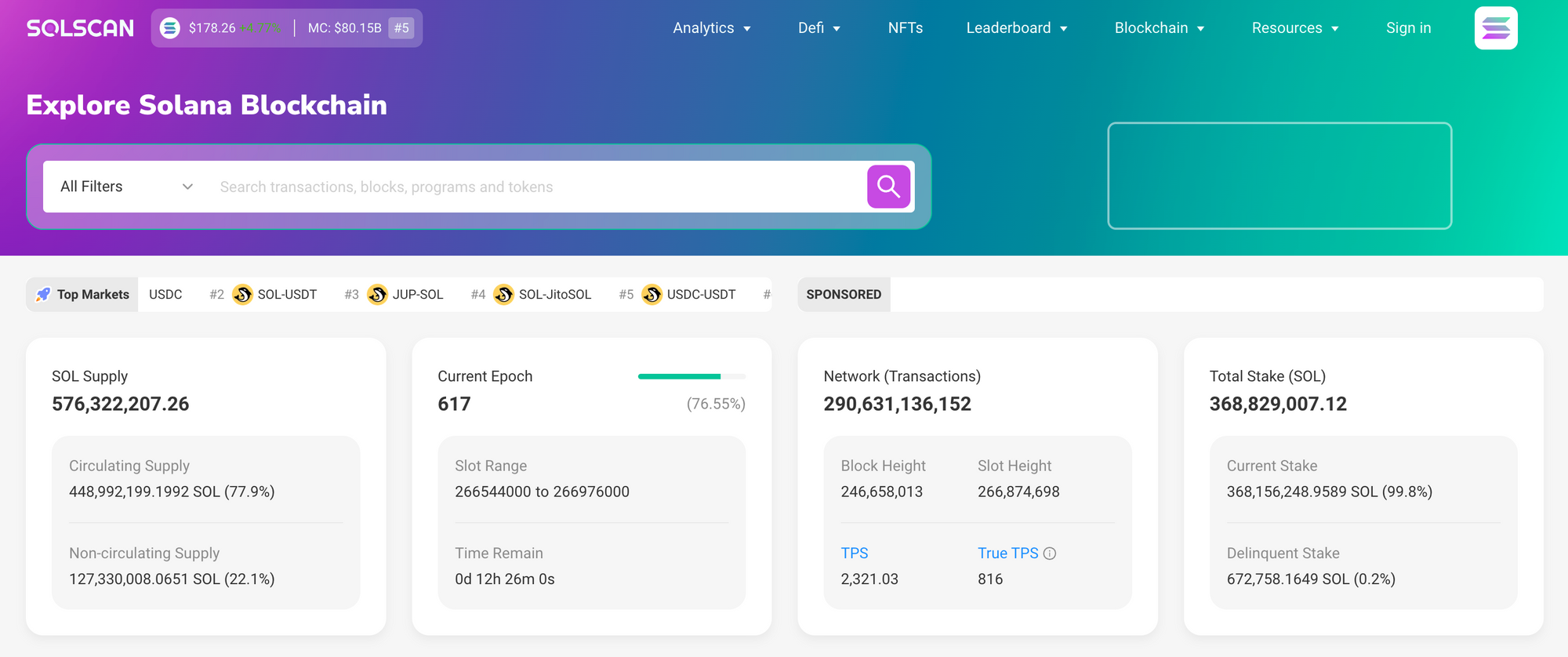
Here’s the thing. Not all explorers are equal; pick one with good decoding of programs and NFTs. I prefer tools that show decoded instruction names, program IDs, and easy permalinks. Also choose an explorer that supports exporting and has a stable API for automation. I’ll be honest — I’m biased toward explorers that make it easy to verify minted metadata and creator addresses on-chain, because too many marketplaces cache data off-chain and you can’t trust that for provenance, somethin’ that has bitten me before… For a dependable starting point check the solscan explorer official site.
Really? Basic security checks get overlooked even by experienced traders. Always verify the transaction signature and the block time for suspicious mints. Check that creator addresses match the collection and that metadata URIs resolve correctly. If an image or metadata is suddenly hosted on an unfamiliar server or points to an IPFS hash that doesn’t match prior history, pause: dig into the mint transaction, look at the candy machine config or minting program, and consider contacting the project’s team before you engage, because prevention beats dispute resolution later.
Wow! APIs matter for scale; I built small scripts to pull transfers daily. CSV exports and scheduled reports let me monitor floor rotation and whale moves. For collectors it’s extra useful to annotate wallets with notes and tags. There’s a tradeoff between convenience and privacy though—using an explorer’s web UI is fast, but running your own indexer or using authenticated API keys reduces finger-printing risk and gives more control over queries and rate limits, which matters when you’re operating a bot or a marketplace.
Okay. Start with a single collection and one wallet to follow closely. Export a week of activity and look for repeated buyers and time-of-day patterns. Use the explorer to preview mint transactions and to confirm token metadata origins. Over time you’ll build heuristics for wash trading, bot-snipes, and healthy organic activity, but remember that heuristics need constant revision as fraudsters adapt and marketplaces change their fee and royalty behavior, so keep learning and iterate your filters.
I’ll admit this part bugs me: many tutorials gloss over the basics of creator verification. I’m not 100% sure why people skip it, but creator mismatch is one of the easiest ways to get fooled. Double-check the on-chain creator list and verify the signatures when possible, and make that a step in your routine.
FAQ
How do I confirm an NFT’s provenance on Solana?
Start with the mint transaction: inspect the instruction set to see which program minted it, confirm the creator addresses on-chain, and follow the token’s transfer history through associated token accounts. Use an explorer that decodes instructions and exposes metadata URIs, then resolve those URIs (IPFS or HTTP) to compare historical content. If something looks off, pause and cross-reference marketplace listings and prior sales; sometimes that simple cross-check saves you from a bad purchase.