English
 Afrikaans
 Albanian
 Amharic
 Arabic
 Bulgarian
 Chinese (Simplified)
 Chinese (Traditional)
 Croatian
 Dutch
Dutch Filipino
 French
 German
 Greek
Greek Hindi
Hindi Indonesian
 Irish
Irish Italian
 Japanese
 Korean
 Lao
Lao Latin
Latin Nepali
 Persian
 Polish
 Portuguese
 Romanian
 Russian
 Serbian
 Sesotho
 Spanish
 Thai
Thai Turkish
Why I Keep Coming Back to the Solscan Explorer — and How I Use It to Track Tokens
Whoa!
I remember the first time I chased a token transfer down the rabbit hole — heart racing, coffee cold — and ended up on a page that told me everything I needed.
At first it felt like peeking at someone else’s bank ledger, though actually, wait—let me rephrase that: it felt like finally seeing the plumbing behind the apps I use.
My instinct said this was powerful and a little scary.
Over time that gut feeling matured into a routine: check the mint address, verify holders, and cross-reference programs before trusting anything with my keys.
Really?
Yep — serious stuff.
Solana moves fast and so do scams.
One tiny wrong address and you lose funds.
So I built a short checklist I run through on every unfamiliar token, and that checklist usually starts at a blockchain explorer.
Here’s the thing.
Explorers aren’t identical.
Some surface-level tools are fine for casual checks, while others give you the nitty-gritty: program interactions, exact instruction data, and historical holder changes that tell a story.
For Solana, I’ve used a few, but I often land on Solscan because it blends speed with depth, and the UI doesn’t hide the important bits behind ten clicks — though somethin’ about every UI has a learning curve.
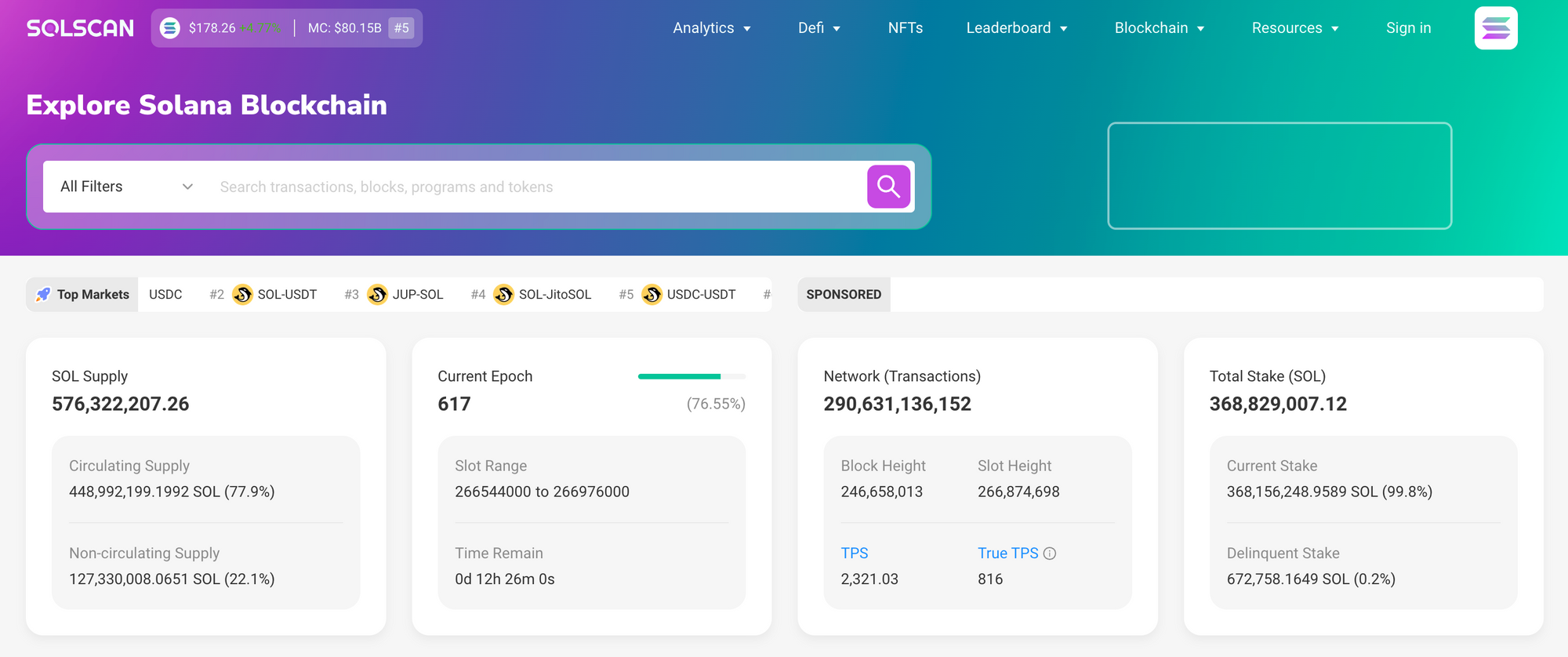
How I use the solscan explorer official site every day
Whoa!
I should be honest — I bookmark the official explorer link and check it before trading new tokens, and yes, you should have a trusted bookmark too: solscan explorer official site.
First I paste the token mint address into the search box.
Then I scan the token overview: decimal places, total supply, and whether the token is flagged or verified.
If the contract interactions look odd — like frequent small transfers to newly created accounts — that’s a red flag and I dig deeper into the transaction history.
Hmm…
On one hand the token tracker shows distribution.
On the other hand distribution tables can be deceiving when top holders are multisigs or liquidity pools.
Initially I thought large holder concentration always meant rug risk, but then realized that some projects lock tokens in multisigs or vesting contracts — context matters.
So I click into the largest holders and inspect the addresses, their activity, and whether those addresses are clearly labeled as exchange or protocol-owned.
Seriously?
You really should check program logs for weird instruction sets.
Transaction details often reveal whether a transfer invoked an unfamiliar program or whether the transaction included a memo that links somewhere shady.
I once caught a token that claimed to be community-run but had a hidden authority moving supply through an obscure program call — that was the moment I decided not to gamble.
Trust, but verify — in practice that means using the explorer to read the raw instructions when the UI flags are insufficient.
Wow!
Solscan’s token holder chart is my go-to quick view.
It shows holder count trends, concentration, and token age in a glancey visual that matters when you’re doing quick triage.
Beyond visuals though, I lean on the event logs and program interactions; they tell you whether a token went through one-time minting, continuous minting, or frequent supply changes.
If supply changes look automated or opaque, that’s when I start asking questions with devs or community channels.
Okay, so check this out—
NFTs and SPL tokens share some metadata patterns but their ecosystems behave differently, and the explorer reflects that.
For NFTs I look at recent sales, creator addresses, and royalty flows so I can tell if a project is actively traded or resting on a spec bubble.
For fungible tokens I focus on liquidity pools, swap pairs, and whether the top liquidity sits on a reputable AMM.
If liquidity is concentrated in a tiny pool with no external audits, I step back.
Something felt off about certain listings.
There’s a small trick I use: copy the mint address and search it across the explorer to see every instance of that token used in programs, staking, or wrapped forms.
That’s how I found a token that was listed under two different names but shared a mint — confusing for newcomers and a get-rich-quick setup for manipulators.
Also, pay attention to the verified badge or community notes when present — they aren’t perfect, but combined with on-chain evidence they help.
Hmm…
I want to be candid: I’m biased toward explorers that surface raw data without hiding behind “simplified” explanations.
This part bugs me — simplified views can lull people into complacency.
I’m not 100% sure every feature is necessary for casual users, but if you’re handling meaningful sums, you need the full trace: holder history, mint authority changes, and program calls.
And yes, that means spending a few extra minutes on the page instead of rushing transactions.
FAQ
How do I verify a token is the real one?
First, always match the mint address from the project’s official channels (Discord, website) to the explorer.
Then check mint authority and supply history on the explorer.
Look for prior interactions that match the project’s announced launches or liquidity events.
If anything is inconsistent — different decimals, unexpected supply jumps, or unknown program calls — pause and ask the community.
Can explorers show me scams?
Short answer: sometimes.
Explorers show facts not intentions.
You can infer scam behavior by patterns — frequent tiny transfers to many wallets, stealth minting, or tokens funneled to unknown centralized addresses.
But explorers won’t replace due diligence; they give you the raw evidence to make a smarter call.